

Cursor vs Windsurf vs Claude Code in 2026: Which AI Coding Tool Should You Use?
📑 Table of Contents
🎯 Quick Verdict
Cursor vs Windsurf vs Claude Code is the defining AI coding tool comparison of 2026 — three tools built on fundamentally different philosophies, targeting overlapping developer audiences at nearly identical price points, but delivering very different day-to-day experiences.
The AI coding tools market has reached an inflection point in 2026. Three tools now dominate the professional developer conversation: Cursor, the AI-native IDE that crossed 1 million users and approaches $1 billion in annualised revenue; Windsurf, the agentic challenger from Codeium that surged after Cursor’s controversial June 2025 pricing changes; and Claude Code, Anthropic’s terminal-native coding agent that became available to all Pro subscribers in February 2026 — the same month Claude Opus 4.6 launched with an 80.8% SWE-bench Verified score.
All three tools are priced within $5 of each other at the individual level. All three support GPT-5.4 and Claude models. All three can read and edit across your entire codebase. The differences — which matter enormously in practice — lie in how they approach AI integration, what their agentic engines can do, and where their billing models create friction. This comparison covers all of it with data from official documentation, independent benchmarks, and community developer feedback from March 2026. For context on how Claude Code fits into the broader Claude ecosystem, see our Claude plans comparison guide. For the full landscape of AI coding tools beyond these three, our AI coding assistants guide covers all major alternatives side by side.
⚡ Head-to-Head Feature Comparison
Overview: Three Tools, Three Philosophies
To understand why this comparison matters, you need to understand that Cursor, Windsurf, and Claude Code are not competing on the same axis. Cursor is an IDE — a full coding environment built on VS Code with AI deeply integrated throughout. Windsurf is also an IDE, but one whose core value proposition is its Cascade agentic engine and aggressive pricing. Claude Code is neither — it is a terminal-native agent that operates outside any IDE entirely, powered by Claude Opus 4.6 and designed for developers who want maximum autonomous coding capability without a graphical interface.
The pricing convergence at $15–20/month for individual plans obscures these fundamental differences. Choosing between them is not a price decision — it is a workflow decision about where you want AI to live in your development environment and how much autonomy you want it to have. For the broadest analysis of how these tools compare to legacy coding assistants like GitHub Copilot, see our AI coding assistants guide.
Cursor: The AI-Native IDE Powerhouse
Cursor is built on VS Code and reimagines the entire coding experience around AI. Unlike plugins or extensions that bolt AI onto an existing editor, Cursor was designed from day one with AI as the primary interface. Its Cursor Agent understands your full codebase, implements features across multiple files simultaneously, runs tests, interprets their output, and iterates — all from a single natural language instruction. The Composer lets you describe a change and watch it cascade across dozens of interconnected files.
Cursor’s defining advantage in 2026 is ecosystem maturity. Every VS Code extension works. Every theme, keyboard shortcut, and workflow you already have carries over. For teams migrating from VS Code with GitHub Copilot, the transition friction is near zero — which explains why Cursor reached 1 million users faster than any AI coding tool before it.
Cursor Pricing (2026)
| Plan | Price | Credits / Month | Key Features |
|---|---|---|---|
| Hobby | Free | Limited | Basic AI features, great for evaluation |
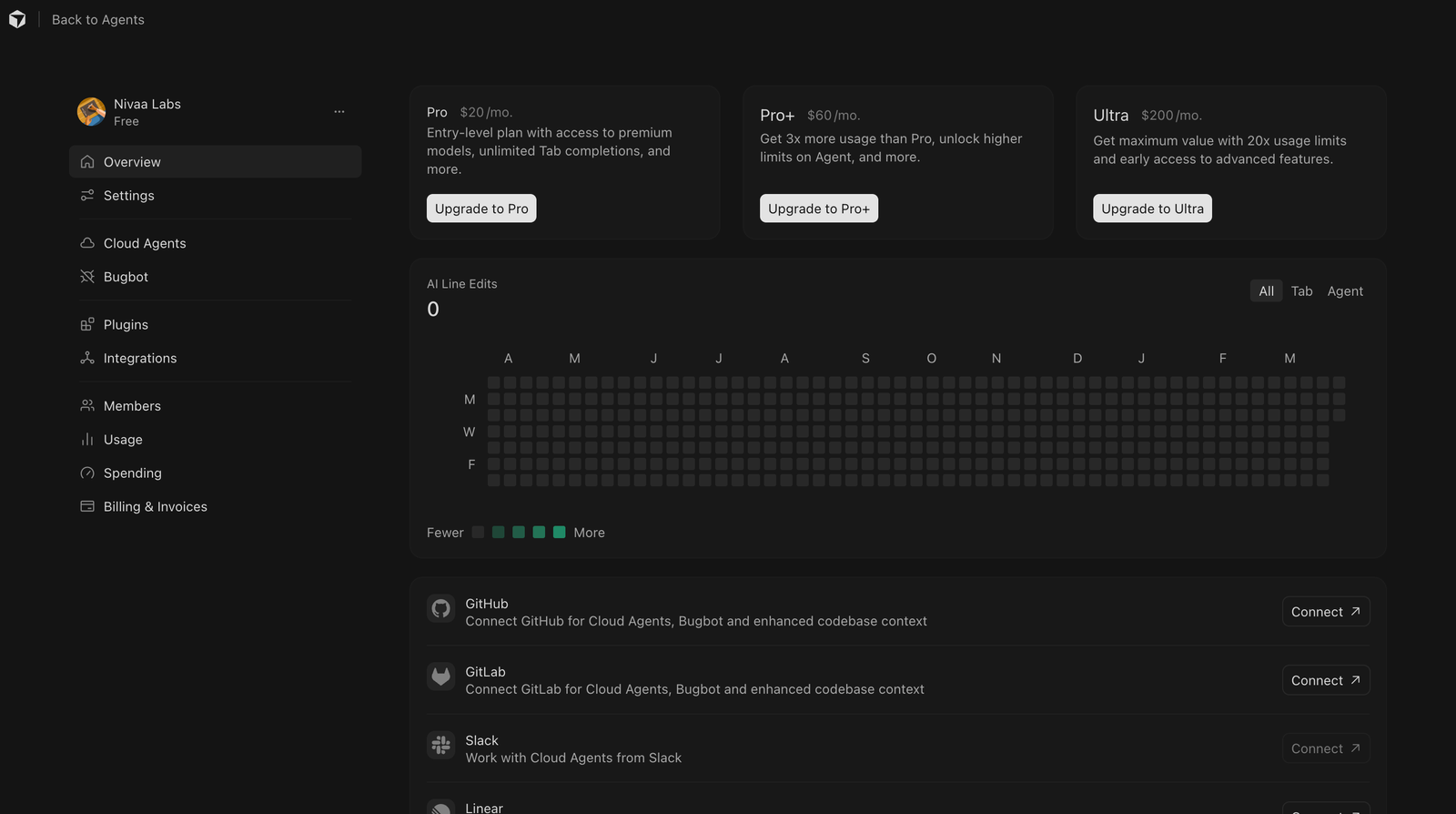
| Pro | $20/mo | $20 credit pool | Unlimited Tab & Auto mode, Agent access |
| Pro+ | $60/mo | $60 credit pool | 3x credits, background agents unlocked |
| Ultra | $200/mo | $200 credit pool | 20x credits, priority access |
| Teams | $40/user/mo | $40 credit pool/user | Shared context, centralized billing, SSO |
Windsurf: The Budget-Friendly Agentic Challenger
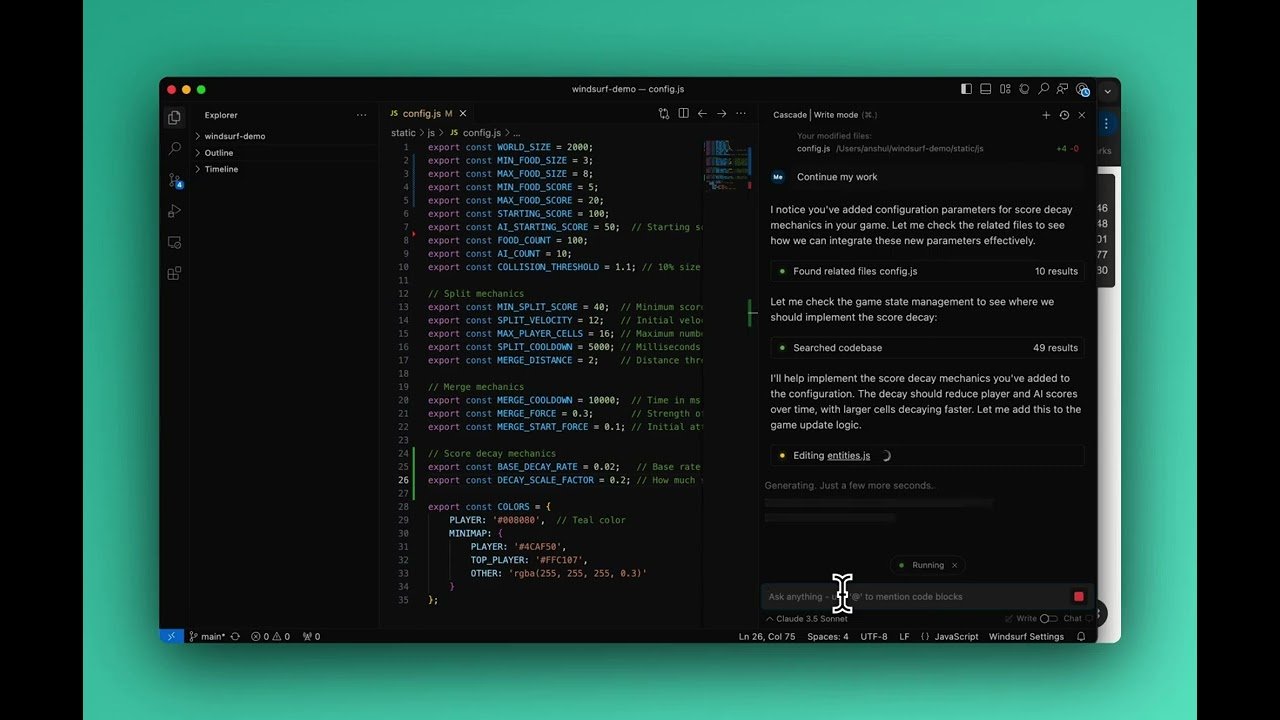
Windsurf rose to prominence in the second half of 2025 as developers fled Cursor’s credit-based pricing overhaul. Its headline feature is Cascade — a deeply agentic AI that reasons across your entire codebase rather than just the open file. Cascade plans, executes, observes output, and adjusts — behaving more like a junior developer pair programming alongside you than an autocomplete system.
Windsurf also introduced Memories — a system that persists codebase context across sessions so the model does not start fresh every time you open the editor. Combined with automatic Lint Fixing, Windsurf’s agentic experience rivals Cursor’s while undercutting it on price at every tier.
As of March 2026, Windsurf transitioned from a credit-based model to a quota-based pricing system. This is a meaningful structural shift: credits were a monthly pool you could burn in any pattern, while quotas impose rate limits with daily and weekly resets. Sprint coders who do all their AI-heavy work in intensive sessions will feel this most. Windsurf’s proprietary SWE-1 model costs zero credits on all plans — a capable fallback for routine tasks that preserves your quota for harder problems requiring GPT-5.4 or Claude.
Windsurf Pricing (2026)
| Plan | Price | Credits / Month | Key Features |
|---|---|---|---|
| Free | $0/mo | 25 credits | Unlimited Tab, SWE-1 Lite free, 5 deploys/day |
| Pro | $15/mo | 500 credits | SWE-1 full, Cascade, Memories, 10 deploys/day |
| Teams | $30/user/mo | 500/user | Admin dashboard, centralized billing, shared context |
| Enterprise | $60/user/mo | 1000/user | SSO, RBAC, SOC 2, priority support |
Claude Code: The Terminal-Native Agentic Powerhouse
Claude Code is a different category of tool entirely. It is not an IDE. It is not a plugin. It is a terminal-native AI agent that operates directly in your command line — reading, writing, and editing files across your entire codebase, running shell commands, debugging errors, and managing complex multi-file workflows with minimal human intervention. Powered by Claude Opus 4.6, which leads SWE-bench Verified at 80.8%, it is the most capable autonomous coding agent available as of March 2026.
In February 2026, Anthropic made two moves that dramatically expanded Claude Code’s reach: they opened access to all Pro subscribers at $20/month, and they launched Claude Opus 4.6 with Agent Teams — parallel coding agents for multi-stream workflows — and Compaction, which provides automatic context summarisation for infinitely long sessions. The 1 million token context window (beta) means Claude Code can hold your entire codebase in context simultaneously — something no IDE-based tool currently matches. According to Anthropic’s usage data, the average developer spends approximately $6 per day on Claude Code, with 90% staying below $12 per day. For how Claude Code compares to OpenCode in terminal-native environments, see our Claude Code vs OpenCode comparison.
Claude Code Pricing (2026)
| Plan | Price | Usage Level | Key Features |
|---|---|---|---|
| Free | $0/mo | No Claude Code access | — |
| Pro | $20/mo ($17 annual) | 5x free tier | Claude Code with Sonnet 4.6, basic agentic tasks |
| Max $100 | $100/mo | 5x Pro usage | Full Opus 4.6, Agent Teams, priority access |
| Max $200 | $200/mo | 20x Pro usage | Maximum usage, full Opus 4.6, Agent Teams |
| Team Premium | $150/user/mo | Team level | Claude Code for teams, SSO, admin controls |
Full Feature Comparison
| Feature | Cursor | Windsurf | Claude Code |
|---|---|---|---|
| Interface Type | Full IDE (VS Code based) | Full IDE (VS Code based) | Terminal / CLI only |
| Free Plan | ✅ Hobby (limited) | ✅ 25 credits/mo | ❌ Not available |
| Individual Pro Price | $20/mo | $15/mo ✅ Cheapest | $20/mo ($17 annual) |
| Tab Autocomplete | ✅ Unlimited (Pro+) | ✅ Unlimited all plans | ❌ Not applicable |
| Agentic Engine | Cursor Agent + Composer | Cascade | Claude Agent + Agent Teams |
| Multi-File Editing | ✅ Composer | ✅ Cascade | ✅ Native terminal |
| Codebase Context | ✅ Full repo | ✅ Full repo + Memories | ✅ 1M token context (beta) |
| Session Memory | ❌ | ✅ Memories feature | ✅ Compaction (infinite) |
| Models Supported | GPT-5.4, Claude, Gemini | GPT-5.4, Claude, Gemini, SWE-1 | Claude Sonnet 4.6, Opus 4.6 |
| Proprietary Model | ❌ | ✅ SWE-1 (free, no credits) | ❌ |
| Background Agents | ✅ Pro+ and above only | ✅ Cascade (all paid plans) | ✅ Agent Teams (Max plan) |
| Parallel Agent Support | ❌ | ❌ | ✅ Agent Teams (Opus 4.6) |
| MCP Support | ✅ | ✅ | ✅ |
| VS Code Extension Support | ✅ Full compatibility | ✅ Full compatibility | ❌ Not applicable |
| Student Discount | ❌ | ✅ ~50% off | ❌ |
| Teams Plan | $40/user/mo | $30/user/mo ✅ Cheapest | $150/user/mo ❌ Most expensive |
| Billing Model | Credits (since Jun 2025) | Quota (since Mar 2026) | Subscription tiers |
Pricing Breakdown: Which Gives You the Best Value?
| Plan Type | Cursor | Windsurf | Claude Code |
|---|---|---|---|
| Free | ✅ Hobby plan | ✅ 25 credits/mo | ❌ No access |
| Individual Pro | $20/mo | $15/mo ✅ Cheapest | $20/mo ($17 annual) |
| Power User | $60/mo (Pro+) | — | $100/mo (Max) |
| Heavy User | $200/mo (Ultra) | — | $200/mo (Max Ultimate) |
| Teams | $40/user/mo | $30/user/mo ✅ Cheapest | $150/user/mo ❌ Most expensive |
| Student Discount | ❌ | ✅ ~50% off | ❌ |
| Annual Savings | ~20% | — | ~15% (Pro only) |
Windsurf is the clear value winner at every tier where it competes. Cursor and Claude Code are equal on individual pricing at $20/month, but Cursor offers more billing tiers for power users while Claude Code’s team plan at $150/user is aimed squarely at enterprise — not small teams. For budget-conscious developers and students, Windsurf’s pricing structure is the strongest in the market. For AI productivity tools that complement these coding environments, our AI productivity tools guide covers the full stack.
Best Use Cases
Use Case 1: Migrating from VS Code + GitHub Copilot — Cursor
Problem: A developer team uses VS Code with GitHub Copilot and wants to upgrade to a more capable AI coding experience without disrupting their existing workflow, extensions, or keyboard shortcuts.
Solution: Cursor. The VS Code compatibility is complete — every extension, theme, and shortcut transfers instantly. The AI upgrade from Copilot to Cursor Agent is significant: Composer can implement features across multiple files from a single natural language description, while Copilot only suggests single-file completions.
Outcome: Teams consistently report a step-change in the scope of tasks they can delegate to AI after switching from Copilot to Cursor. The tradeoff is the credit-based billing, which requires monitoring for teams with variable usage patterns.
Use Case 2: Budget-Constrained Teams and Students — Windsurf
Problem: A startup engineering team of five needs capable AI coding assistance but cannot justify $40/user/month for Cursor Teams or $150/user/month for Claude Code Team Premium — a monthly AI tooling bill that rivals their cloud infrastructure costs.
Solution: Windsurf Teams at $30/user/month — $10 cheaper per seat than Cursor, with comparable Cascade agentic capabilities, Memories for persistent codebase context, and the SWE-1 model at zero credits for routine tasks. Students get an additional ~50% discount unavailable on any competing platform.
Outcome: A five-person team saves $600/year choosing Windsurf Teams over Cursor Teams — and more than $7,000/year over Claude Code Team Premium — while accessing agentic coding capabilities that match Cursor’s at the Pro tier.
Use Case 3: Complex Multi-File Agentic Engineering — Claude Code
Problem: A senior engineer needs to refactor a large production codebase — updating deprecated APIs, resolving cross-file type inconsistencies, writing comprehensive tests, and generating updated documentation — without manually coordinating every step across hundreds of interconnected modules.
Solution: Claude Code with Opus 4.6 via the Max plan. The 1 million token context window holds the entire codebase simultaneously. Agent Teams spawns parallel Opus instances for frontend, backend, and test workstreams simultaneously. Compaction eliminates context limits on long sessions. The 128K maximum output token ceiling means entire file diffs and test suites are generated in a single response without truncation.
Outcome: For the class of agentic engineering work that requires genuine autonomy across a large codebase, Claude Code with Opus 4.6 outperforms both IDE-based tools on code quality and cross-file consistency — at the cost of a terminal-only interface. For how Claude Code Agent Teams compares to other multi-agent approaches, see our Cursor Composer 2 vs Opus 4.6 comparison.
Use Case 4: Parallel Multi-Stream Feature Development — Claude Code Agent Teams
Problem: A product team needs to ship a full-stack feature simultaneously across frontend, backend, database schema, and API documentation — work that normally requires four developers coordinating over several days.
Solution: Claude Code’s Agent Teams on the Max $100/month plan. Multiple Opus 4.6 instances run in parallel — one per workstream — sharing relevant interface contracts through coordinated task lists. There is no equivalent in Cursor or Windsurf.
Outcome: Teams that have adopted Agent Teams report it as the feature that most changed their production velocity — compressing multi-day coordinated engineering work into single agent sessions. At $100/month versus the cost of a developer-day, the economics are compelling for teams with complex parallelisable workloads.
Pros and Cons
✅ Pros
- Cursor — Most Mature AI IDE Ecosystem: Cursor’s VS Code foundation means complete extension compatibility and zero migration friction from existing VS Code workflows. Its 1M+ user base translates to a larger community, more tutorials, and faster bug resolution than any competing AI coding tool.
- Cursor — Broadest Model Support: Cursor supports GPT-5.4, Claude Opus 4.6, Gemini 3.1 Pro, and a growing model list via the selector. No other AI IDE offers comparable flexibility to route tasks to the best model for each job type.
- Windsurf — Best Value at Every Price Point: Windsurf Pro at $15/month and Teams at $30/user undercut Cursor by 25–50% while delivering comparable agentic capabilities via Cascade. The ~50% student discount is the most generous offer in AI coding tools in 2026.
- Windsurf — Free SWE-1 Model Preserves Credits: Windsurf’s proprietary SWE-1 model is available at zero credit cost on all plans — giving developers a capable fallback for routine tasks that preserves monthly quota for harder problems that genuinely need GPT-5.4 or Claude.
- Windsurf — Memories for Persistent Codebase Context: Windsurf’s Memories feature persists codebase context across sessions — eliminating the cold-start problem where the AI has to re-learn your project structure every time you open the editor.
- Claude Code — Best-in-Class Model on SWE-bench: Powered by Claude Opus 4.6 with 80.8% SWE-bench Verified — the highest score among models available to any IDE or coding tool in March 2026. For production engineering where code quality is the primary success metric, the model advantage is real.
- Claude Code — 1M Token Context Window: The 1 million token context window (beta) is the largest available in any coding tool in 2026. Holding an entire large codebase in context simultaneously reduces the cross-file errors and hallucinated imports that plague smaller-context tools on large projects.
- Claude Code — Agent Teams with No Equivalent: Parallel multi-agent orchestration via Agent Teams is a capability available nowhere else in the AI coding tool market. For teams with parallelisable engineering workloads, this feature has no substitute in Cursor or Windsurf.
❌ Cons
- Cursor — Controversial Credit-Based Pricing: The June 2025 switch from 500 fixed requests to a credit pool effectively cut monthly capacity by more than half for most Pro users at the same $20/month price. Developer trust in Cursor’s pricing stability has not fully recovered and the migration to Windsurf it triggered demonstrates the real-world impact.
- Cursor — Background Agents Locked to $60/month: One of Cursor’s most compelling agentic features requires Pro+ at $60/month. At $20/month Pro, you are paying for a significantly less capable agentic experience than the marketing material suggests.
- Windsurf — March 2026 Quota Shift Creates New Friction: The transition from credits to quota-based billing in March 2026 is fresh and its real-world impact is still being measured. Developers who concentrate heavy AI usage into intensive sessions may find the new rate limits disruptive in ways the old credit system did not impose.
- Windsurf — Smaller Ecosystem than Cursor: Windsurf’s community, tutorial library, and third-party integrations lag Cursor’s by a significant margin. Developers who rely on community resources to learn new tools will find considerably less material available for Windsurf.
- Claude Code — Terminal-Only Interface: The absence of any graphical interface is a genuine barrier for developers who are not comfortable in the command line. Claude Code is explicitly designed for experienced terminal users — it is not a tool for beginners or developers who prefer visual coding environments.
- Claude Code — No Free Plan: Claude Code requires a paid subscription from day one with no free tier, no trial access, and no limited-usage evaluation. For developers wanting to test the tool before committing $20/month, there is no low-risk on-ramp available.
- Claude Code — Team Plan Pricing Is Enterprise-Grade: Claude Code Team Premium at $150/user/month is priced for large enterprises — not the startups and small teams that make up the majority of the developer market. Teams of 5–20 will find the economics difficult to justify versus Windsurf Teams at $30/user or Cursor Teams at $40/user.
Final Verdict
The Cursor vs Windsurf vs Claude Code comparison in March 2026 does not have a universal winner — and any recommendation that ignores your specific workflow, team size, and terminal comfort level is oversimplifying a genuinely nuanced decision.
Choose Cursor if you are migrating from VS Code and want the most mature, ecosystem-rich AI IDE experience available. Cursor’s extension compatibility, broad model support, and battle-tested Composer multi-file editing make it the safest default choice for teams that want AI integration without workflow disruption. Background agents cost $60/month and credit monitoring is required — but for teams that value ecosystem stability over price optimisation, Cursor remains the benchmark.
Choose Windsurf if price matters and you want comparable agentic capabilities without the Cursor premium. At $15/month for individuals and $30/user for teams, Windsurf delivers Cascade agentic coding, Memories persistence, unlimited Tab completions, and the free SWE-1 model at a price point that makes it the obvious choice for budget-conscious developers and students. The March 2026 quota shift introduces some uncertainty, but the core value proposition remains the strongest in the market for cost-sensitive teams.
Choose Claude Code if you are a terminal-comfortable developer who needs maximum autonomous coding capability — particularly for large, complex codebases where the 1 million token context window, Agent Teams parallel orchestration, and Claude Opus 4.6’s 80.8% SWE-bench lead genuinely matter. The $20/month Pro entry point makes it accessible, though heavy users will need the $100/month Max plan. Claude Code is not for everyone — but for the developer it is designed for, nothing else comes close. For the broader AI tooling stack that these coding tools plug into, our AI productivity tools guide covers the full landscape.
Ready to Try These Tools?
Try Cursor Free → Try Windsurf Free → Try Claude Code →Cursor and Windsurf both offer free plans — Claude Code requires a paid Pro subscription from $20/month
❓ Frequently Asked Questions
Which is the best AI coding tool in 2026: Cursor, Windsurf, or Claude Code?
It depends on your workflow. Cursor is best for VS Code users wanting the most mature AI IDE. Windsurf is best for budget-conscious developers and teams — $15/month Pro and $30/user Teams. Claude Code is best for terminal-native developers needing maximum autonomous coding powered by Claude Opus 4.6 with 80.8% SWE-bench Verified.
How much does Cursor cost in 2026?
Cursor offers a free Hobby plan, Pro at $20/month, Pro+ at $60/month (required for background agents), Ultra at $200/month, and Teams at $40/user/month. Since June 2025, Cursor uses credit-based billing — the $20 Pro plan includes a $20 credit pool, limiting users to approximately 225 AI requests per month versus the previous 500.
How much does Windsurf cost in 2026?
Windsurf offers Free (25 credits/month), Pro at $15/month (500 credits), Teams at $30/user/month, and Enterprise at $60/user/month. Tab completions are unlimited on all plans. As of March 2026, Windsurf switched to a quota-based system with daily and weekly rate limits. The SWE-1 model costs zero credits on all plans.
How much does Claude Code cost in 2026?
Claude Code is available via Claude Pro at $20/month (or $17/month billed annually), Claude Max at $100/month or $200/month, and Claude Team Premium at $150/user/month. There is no free plan. Anthropic reports the average developer spends approximately $6 per day on Claude Code with 90% of users staying below $12 per day.
Is Windsurf cheaper than Cursor?
Yes. Windsurf Pro is $15/month versus Cursor Pro at $20/month — 25% cheaper. Windsurf Teams is $30/user versus Cursor Teams at $40/user — 25% cheaper per seat. Windsurf also offers a ~50% student discount not available on Cursor. Windsurf grew significantly after Cursor’s controversial June 2025 credit-based pricing change.
Does Claude Code work without an IDE?
Yes — Claude Code is terminal-native and designed to work entirely in the command line without any IDE. It reads, writes, and edits files across your codebase, runs shell commands, interprets output, and manages multi-file workflows autonomously. It has no graphical interface and is not suitable for developers who are not comfortable working in the terminal.
Which AI coding tool is best for beginners in 2026?
Cursor is the best choice for beginners due to its familiar VS Code interface, complete extension compatibility, and large community of tutorials. Windsurf is also beginner-friendly with a similar IDE experience and a more generous free plan. Claude Code requires terminal comfort and is explicitly designed for experienced developers — it is not recommended for beginners.
Latest Articles
Browse our comprehensive AI tool reviews and productivity guides
Cursor Composer 2 vs Claude Opus 4.6 vs Sonnet 4.6 in 2026:...
Cursor Composer 2 vs Claude Opus 4.6 vs Sonnet 4.6 in 2026: Which Model Should You Use for Agentic Coding?
Cursor Composer 2 vs Claude Opus 4.6 vs Sonnet 4.6 — The smartest dev tools just leveled up. See which AI model actually codes, plans, and ships like a teammate—not just a chatbot.
Cursor vs Windsurf vs Claude Code in 2026: Which AI Coding Tool...
Cursor vs Windsurf vs Claude Code in 2026: Which AI Coding Tool Should You Use?
Cursor vs Windsurf vs Claude Code is the defining AI coding tool comparison of 2026 — three tools built on fundamentally different philosophies, targeting overlapping developer audiences at nearly identical price points, but delivering very different day-to-day experiences
Claude Dispatch Review 2026: Anthropic’s Remote AI Agent — Setup, Use Cases,...
Claude Dispatch Review 2026: Anthropic’s Remote AI Agent — Setup, Use Cases, Limits & Is It Worth It?
Claude Dispatch launched March 17, 2026 — send tasks from your phone, your desktop executes them locally, you come back to finished work. Setup takes 2 minutes. Current reliability is ~50% on complex tasks. Here is everything you need to know before relying on it.
Xiaomi MiMo-V2-Pro vs GPT-5.4 in 2026: China’s Stealth Trillion-Parameter Model Takes on...
Xiaomi MiMo-V2-Pro vs GPT-5.4 in 2026: China’s Stealth Trillion-Parameter Model Takes on OpenAI’s Flagship
A Xiaomi AI model appeared anonymously on OpenRouter on March 11, topped the usage charts, processed 1 trillion tokens, and beat GPT-5.4 on Terminal-Bench 2.0 (86.7% vs 75.1%) — before anyone knew who built it. Full breakdown inside.
GPT-5.4 vs Claude Opus 4.6 in 2026: Benchmarks, Pricing & Which Model...
GPT-5.4 vs Claude Opus 4.6 in 2026: Benchmarks, Pricing & Which Model Wins for Developers
Two flagship models, one month apart, trading benchmark leads across nine evaluations. GPT-5.4 is cheaper and broader. Claude Opus 4.6 writes better code and ranks #1 with real users. Here is exactly which one you should be using.
Cursor Composer 2 vs Claude Opus 4.6 in 2026: Benchmarks, Pricing &...
Cursor Composer 2 vs Claude Opus 4.6 in 2026: Benchmarks, Pricing & Which Is Better for Developers
Cursor Composer 2 launched March 19, 2026 — beats Claude Opus 4.6 on Terminal-Bench 2.0 (61.7% vs 58.0%) at one-tenth the token cost. Here is what that actually means for your workflow.
Claude Code vs OpenCode in 2026: Is the Free Open-Source Alternative Worth...
Claude Code vs OpenCode in 2026: Is the Free Open-Source Alternative Worth It for Developers?
Claude Code holds a 57.5% SWE-bench score and 4% of all public GitHub commits. OpenCode is free, open-source, and supports 75+ AI models. Here is the full comparison for 2026.
Claude Free vs Pro vs Cowork vs Claude Code 2026: Which Plan...
Claude Free vs Pro vs Cowork vs Claude Code 2026: Which Plan Is Right for You?
Claude Free, Pro, Max, Cowork, and Claude Code compared side by side — pricing from $0 to $200/month, real usage limits, and which plan delivers the best value for professionals in 2026.
The 7 Best AI Chatbots for Small Business Owners 2026: Free +...
The 7 Best AI Chatbots for Small Business Owners 2026: Free + Paid Solutions
Discover the 7 best AI chatbots for small business owners in 2026, offering both free and paid solutions to enhance customer engagement and operational efficiency.
Claude 3 vs ChatGPT 2026: The Ultimate Comparison with Pricing & Features
Claude 3 vs ChatGPT 2026: The Ultimate Comparison with Pricing & Features
Explore Claude 3 vs ChatGPT 2026 in this ultimate comparison of enterprise AI solutions, examining features, pricing, and performance for strategic business integration.
Top 5 AI Chatbots for Customer Service 2026: Boost Your Support with...
Top 5 AI Chatbots for Customer Service 2026: Boost Your Support with Smart Automation
Discover the top 5 AI chatbots for customer service in 2026, boosting support with smart automation, detailed features, and pricing.
The 6 Best Free AI Chatbots 2026: Powerful Tools Without the Price...
The 6 Best Free AI Chatbots 2026: Powerful Tools Without the Price Tag
The world of free AI chatbots in 2026 is evolving faster than ever, giving individuals, startups, and enterprises access to powerful conversational AI without the cost barrier. From customer support automation to lead generation