
7 Best ChatGPT Alternatives in 2026: We Tested Every One (Free + Paid Options)
📑 Table of Contents
- Why People Are Leaving ChatGPT in 2026
- 1. Claude (Anthropic) — Best for Writing & Coding
- 2. Google Gemini — Best for Google Users
- 3. Perplexity AI — Best for Research
- 4. DeepSeek — Best Free Alternative
- 5. Grok (xAI) — Best for Real-Time Data
- 6. Microsoft Copilot — Best for Microsoft 365 Users
- 7. Manus AI — Best for Autonomous Task Execution
- Full Comparison Table
- Pricing Breakdown
- Which One Should You Use?
- Frequently Asked Questions
🎯 Quick Verdict
ChatGPT is still the most widely used AI tool in the world — but in 2026 it is no longer the best at any single thing. Whether you need better coding, smarter research, a free alternative, or real-time data, there is a more specialised tool for every job.
ChatGPT changed everything when it launched in 2022. But in 2026, the AI landscape looks nothing like it did then. OpenAI’s recent controversies — including the QuitGPT boycott that reportedly drove over 2.5 million users to cancel subscriptions — have accelerated a trend that was already underway: developers, researchers, writers, and everyday users are actively looking for better alternatives.
And the good news is that better alternatives genuinely exist. Claude leads Chatbot Arena rankings. Gemini’s free tier offers a 2 million token context window that dwarfs anything ChatGPT offers without paying $200/month. DeepSeek is completely free with no daily limits. Perplexity cites every answer. The AI tool that was best 18 months ago is not necessarily the best tool today. This guide covers the 7 most credible ChatGPT alternatives in March 2026 — what each one does better, what it does worse, who it is for, and exactly what it costs. For an in-depth comparison of the two most powerful models specifically, see our GPT-5.4 vs Claude Opus 4.6 comparison. For AI tools that go beyond chatbots into productivity workflows, our AI productivity tools guide covers the full landscape.
⚡ ChatGPT Alternatives — Feature Comparison at a Glance
Why People Are Leaving ChatGPT in 2026
ChatGPT is still the most recognisable AI brand in the world. But recognition and daily usefulness are increasingly different things. The QuitGPT movement that emerged in March 2026 crystallised frustrations that had been building for months — random refusals on perfectly normal prompts, corporate-filtered responses, unpredictable quality between sessions, and a $200/month Pro tier that many users felt did not justify the cost.
But the more fundamental reason people are looking for alternatives is not frustration — it is that the alternatives have genuinely caught up and in many cases surpassed ChatGPT on the metrics that matter most for specific workflows. Claude leads every major coding benchmark. Gemini’s free tier offers a 2 million token context window. DeepSeek is completely free. Perplexity gives you sourced answers for every claim. None of these things were true 18 months ago. They are true now. The right question is not “is there a good ChatGPT alternative?” — it is “which alternative is right for my specific needs?”
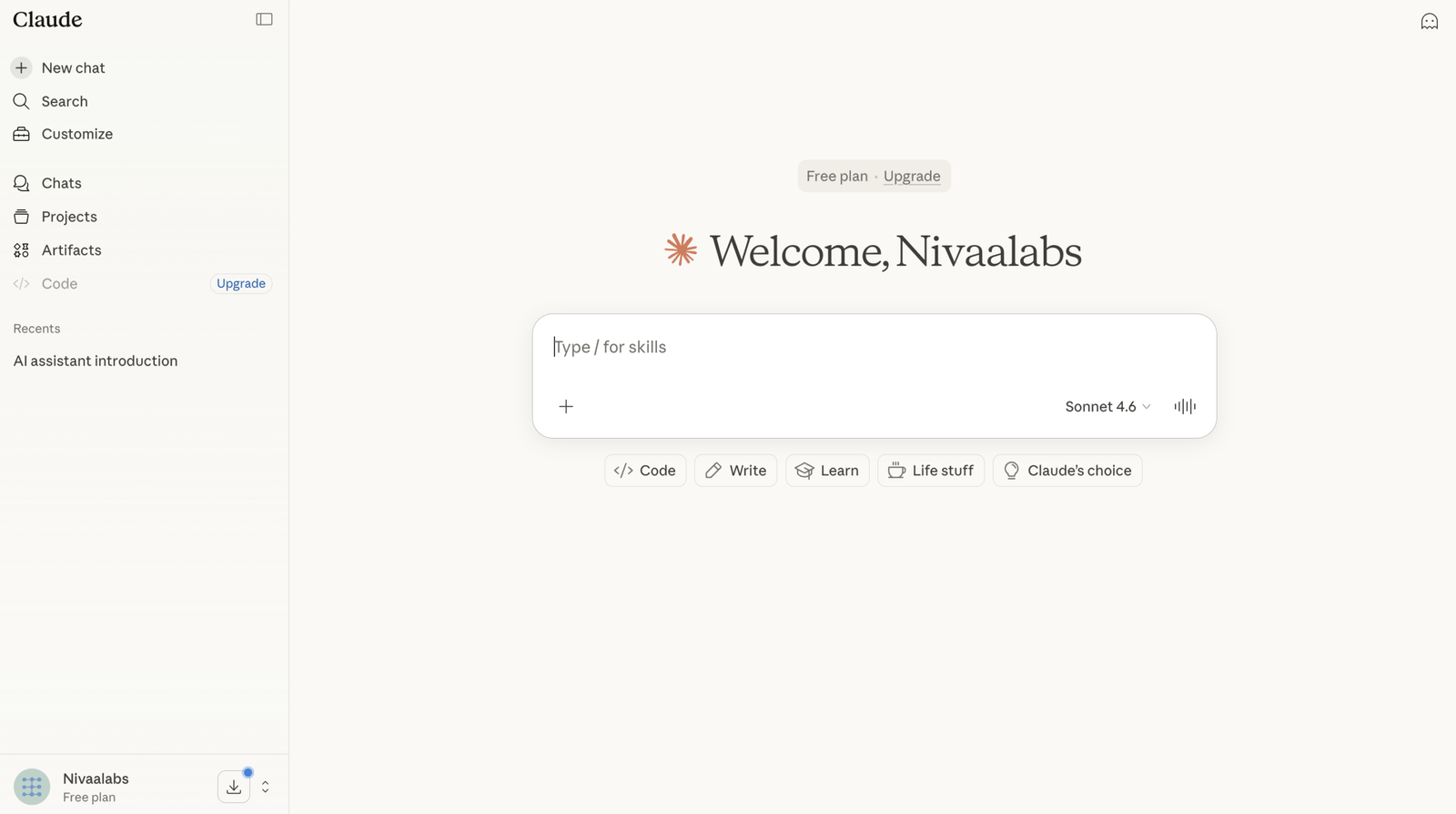
1. Claude (Anthropic) — Best Overall ChatGPT Alternative
Claude is the most powerful ChatGPT alternative available in March 2026, full stop. Claude Opus 4.6 leads SWE-bench Verified at 80.8% — the most rigorous real-world coding benchmark available — and ranks #1 globally on Chatbot Arena with a 1503 ELO score in user preference testing. That last number matters more than most benchmarks: it reflects real users, real conversations, and real preferences — not synthetic evaluations.
What makes Claude distinctly better than ChatGPT for most professional workflows is intent understanding. Claude interprets ambiguous prompts more accurately, produces longer and more coherent outputs (128K maximum output tokens versus ChatGPT’s shorter ceiling), and handles multi-document analysis with a 1 million token context window that remains unmatched in the industry. Writers find Claude’s prose more natural. Developers find its code more architecturally consistent. Researchers find its reasoning more transparent.
Claude’s Agent Teams feature — available on the Opus 4.6 Max plan — lets you spawn multiple Claude instances working in parallel on different parts of a project simultaneously. There is no equivalent in ChatGPT. For the developer or knowledge worker who needs one AI to do everything well, Claude is the clearest step up from ChatGPT in 2026. For a complete breakdown of Claude’s coding capabilities versus GPT-5.4, see our GPT-5.4 vs Claude Opus 4.6 comparison. For how to choose between Claude’s own plans, our Claude plans guide covers every tier.
Claude Pricing (2026)
| Plan | Price | Model Access | Key Features |
|---|---|---|---|
| Free | $0/mo | Sonnet 4.6 | Artifacts, Projects, limited messages |
| Pro | $20/mo ($17 annual) | Opus 4.6 + Sonnet 4.6 | 5x usage, Claude Code, Cowork |
| Max 5x | $100/mo | Full Opus 4.6 | 5x Pro usage, Agent Teams, priority |
| Max 20x | $200/mo | Full Opus 4.6 | 20x Pro usage, all features |
| Team | $25/user/mo | Opus 4.6 + Sonnet 4.6 | Shared Projects, admin controls |
✅ Pros
- #1 globally on Chatbot Arena user satisfaction (ELO 1503)
- Best coding model — 80.8% SWE-bench Verified
- 128K output tokens — best-in-class for long documents
- 1M token context window (beta)
- Agent Teams for parallel multi-agent workflows
- Free tier includes Sonnet 4.6 — genuinely capable model
❌ Cons
- No native image generation
- No advanced voice mode like ChatGPT
- Agent Teams only on $100/mo Max plan
- Smaller third-party plugin ecosystem than ChatGPT
2. Google Gemini — Best for Google Ecosystem Users
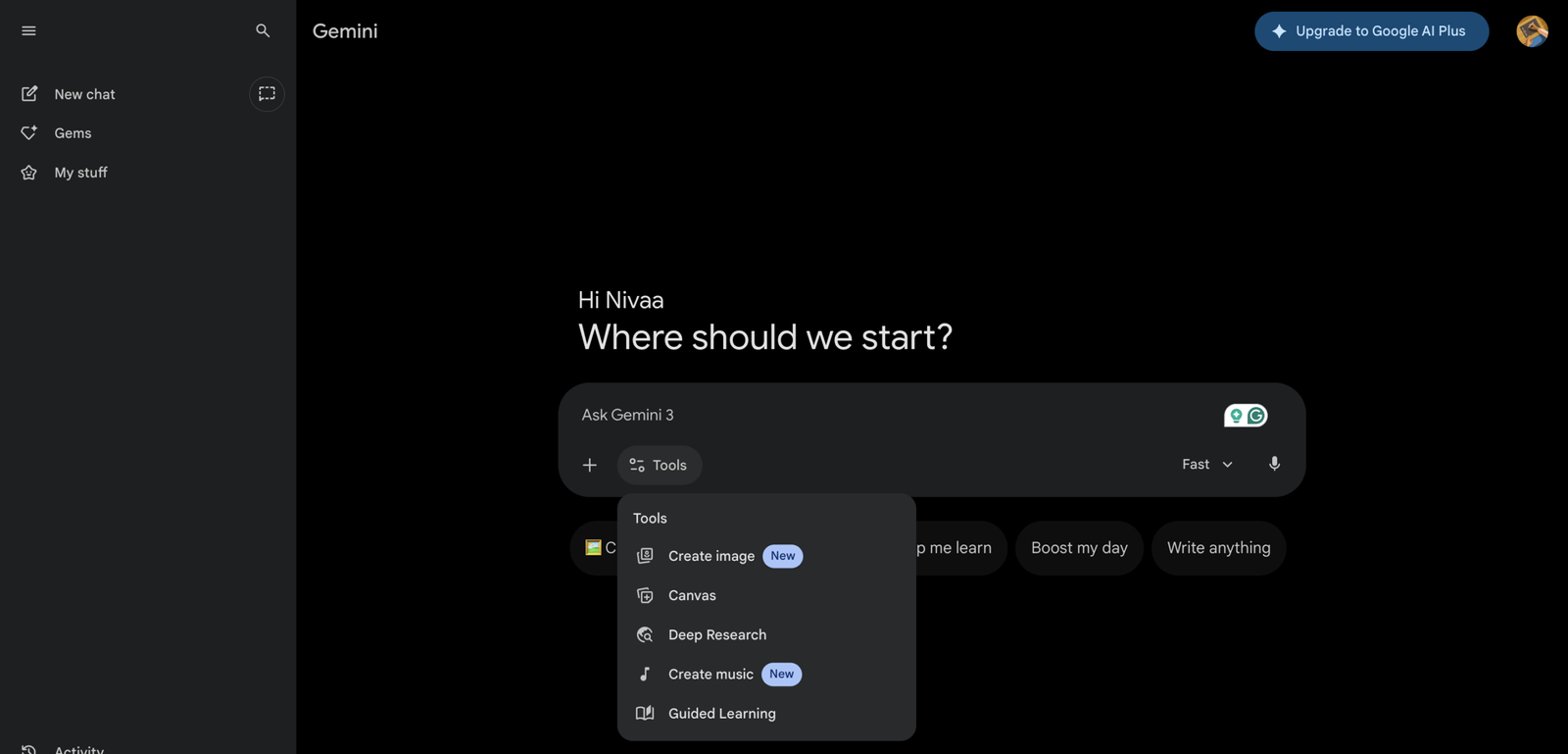
Google Gemini is the most logical free replacement for ChatGPT Plus for most everyday users in 2026. The free tier now includes access to a 2 million token context window — significantly larger than what ChatGPT Plus offers at 32K — and Gemini 3.1 Pro posted leading scores on 13 of 16 major benchmarks, including 94.3% on GPQA Diamond, ahead of both Claude Opus 4.6 and GPT-5.4 on that specific test.
Gemini’s biggest advantage over ChatGPT is its native integration with Google Search. It pulls real-time information from the web without needing a separate browsing plugin — a structural advantage that pure language models cannot replicate. Its integration with Google Workspace means you can summarise emails in Gmail, generate content in Docs, and analyse data in Sheets without leaving your workflow. For users already living inside Google’s ecosystem, Gemini is not just a ChatGPT alternative — it is a meaningfully better tool for the specific workflows Google supports.
Gemini Pricing (2026)
| Plan | Price | Model Access | Key Features |
|---|---|---|---|
| Free | $0/mo | Gemini 3.1 Flash | Real-time search, Google Workspace integration, 2M context |
| Google One AI Premium | $20/mo | Gemini 3.1 Pro | Full Pro model, NotebookLM Plus, Deep Research, 2TB storage |
| Workspace Business | $30/user/mo | Gemini 3.1 Pro | Enterprise controls, Vertex AI access, admin dashboard |
✅ Pros
- 2M token context window on free tier
- Native Google Search integration — real-time data
- Best benchmark scores on GPQA Diamond (94.3%)
- Deep Google Workspace integration (Docs, Gmail, Sheets)
- NotebookLM included on paid plan
- Free tier is genuinely competitive with ChatGPT Plus
❌ Cons
- Weaker coding performance vs Claude for complex tasks
- Less useful outside Google ecosystem
- Occasional inconsistency on creative writing tasks
- Privacy concerns for users outside Google Workspace
3. Perplexity AI — Best for Research & Fact-Checking
Perplexity is a fundamentally different kind of AI tool from ChatGPT. It is not a general-purpose assistant — it is an AI-powered search engine that gives you sourced, cited answers rather than generated text that may or may not be accurate. Every answer Perplexity provides includes direct citations to the sources it used. You can verify every claim immediately. This makes it the most trustworthy AI tool for research, fact-checking, and evidence-based work — tasks where ChatGPT’s tendency to confidently hallucinate is a real problem.
Perplexity’s Pro plan at $20/month includes access to multiple frontier models — including GPT-5.4, Claude Sonnet 4.6, Gemini, DeepSeek, and Grok — which effectively makes it a multi-model interface for the same price as a single ChatGPT Plus subscription. The Pro Search feature runs deep multi-step research queries, synthesises findings from dozens of sources, and produces structured reports with full citation trails. For analysts, students, researchers, and knowledge workers who spend significant time verifying information, Perplexity is the most valuable $20/month AI subscription available in 2026.
Perplexity Pricing (2026)
| Plan | Price | Key Features |
|---|---|---|
| Free | $0/mo | Unlimited basic searches, limited Pro model access, citations on all answers |
| Pro | $20/mo ($16.67 annual) | 300+ deep research queries/day, file uploads, GPT-5.4 + Claude + Gemini access |
| Education Pro | $4.99/mo (verified) | Full Pro features with student ID verification via SheerID |
| Max | $200/mo | Unlimited searches, all models, no restrictions |
| Enterprise Pro | $40/user/mo | Team spaces, SSO, admin controls, shared workspaces |
✅ Pros
- Every answer includes source citations — no hallucination risk
- Pro plan includes GPT-5.4, Claude, and Gemini access
- Best tool for research and fact-checking tasks
- No account needed for basic free searches
- $4.99/mo student plan — best value AI subscription available
- Deep Research mode synthesises dozens of sources
❌ Cons
- Not designed for creative writing or long-form content
- Less capable than Claude or ChatGPT for coding tasks
- Enterprise Pro at $40/user is expensive for small teams
- No image generation capabilities
4. DeepSeek — Best Free ChatGPT Alternative
DeepSeek is the most compelling free ChatGPT alternative in 2026, and it is not particularly close. The DeepSeek web interface and mobile app are completely free to use with no subscription fees and no daily usage limits — a stark contrast to every other frontier AI tool on this list. The model is open-source, built by Chinese AI company DeepSeek, and its Mixture of Experts architecture activates only 37 billion of its 671 billion parameters per forward pass — dramatically reducing computational cost while maintaining high performance.
DeepSeek’s API pricing is almost incomprehensibly cheap for developers — input tokens start at just $0.028 per million for cache hits, making it the lowest-cost frontier model by a wide margin. For users who want a capable free AI assistant without hitting rate limits, DeepSeek is the right choice. For developers building applications where cost per token is the primary concern, DeepSeek’s API pricing has no equivalent among frontier models.
DeepSeek Pricing (2026)
| Access Type | Price | Notes |
|---|---|---|
| Web App / Mobile | Free, no limits | No account required for basic use, no daily cap |
| API (cache hit) | $0.028/M input tokens | Lowest frontier model price available in 2026 |
| API (standard) | ~$0.14/M input tokens | Still dramatically cheaper than Claude or GPT-5.4 |
✅ Pros
- Completely free web app with no daily limits
- Open-source — full transparency on model weights
- Cheapest API pricing of any frontier model in 2026
- 128K token context window on free tier
- Strong reasoning and coding performance for a free tool
❌ Cons
- Chinese company — data privacy concerns for enterprise use
- Censors politically sensitive topics about China
- Less polished UI than ChatGPT or Claude
- No image generation or voice mode
- No dedicated power-user subscription tier
5. Grok (xAI) — Best for Real-Time Data & Uncensored Responses
Grok is xAI’s AI assistant with a 2 million token context window and direct access to real-time data from X (formerly Twitter) — a capability no other AI tool on this list can match. If your work involves tracking breaking news, monitoring social sentiment, or understanding what is happening on X right now, Grok’s native X data integration gives it a structural advantage that GPT-5.4 and Claude cannot replicate regardless of their benchmark scores.
Grok’s API pricing is also among the cheapest of any frontier model at $0.20 per million input tokens for its smaller models — significantly cheaper than GPT-5.4, Claude Sonnet, or Gemini Pro. Grok’s willingness to answer questions that other AI tools refuse makes it a popular choice among developers and researchers who find ChatGPT and Claude’s safety guardrails too restrictive for their work.
Grok Pricing (2026)
| Plan | Price | Key Features |
|---|---|---|
| Free (X Basic) | $0/mo | Limited Grok access via X platform |
| X Premium | $8/mo | Full Grok access, real-time X data, 2M context |
| X Premium+ | $16/mo | Priority Grok access, highest rate limits |
| API (small models) | $0.20/M input | Cheapest frontier API pricing available |
✅ Pros
- Real-time X/Twitter data — unique capability
- 2M token context window
- Cheapest subscription at $8/mo via X Premium
- Fewer content restrictions than ChatGPT or Claude
- Very cheap API pricing for developers
❌ Cons
- Tied to X platform — requires X subscription
- Elon Musk’s political positions reflected in outputs
- Weaker coding benchmark scores vs Claude or GPT-5.4
- Fewer third-party integrations than ChatGPT
- Data privacy concerns for enterprise use
6. Microsoft Copilot — Best for Microsoft 365 Users
Microsoft Copilot is the most practical ChatGPT alternative for professionals whose work lives inside Microsoft 365. It integrates directly into Word, Excel, PowerPoint, Outlook, and Teams — summarising meetings, drafting documents, analysing spreadsheets, and generating presentations without leaving the apps you already use every day. For enterprise teams standardised on Microsoft 365, Copilot’s workflow integration is its defining advantage over every other AI tool on this list.
Copilot’s underlying model is GPT-5.4, meaning the raw AI capability is equivalent to ChatGPT Plus. The difference is execution context — Copilot can access your calendar, your emails, your documents, and your meeting transcripts, giving it organisational context that a standalone ChatGPT session never has. For individuals, Copilot Pro at $30/month is expensive relative to alternatives. For enterprise teams already paying for Microsoft 365, the incremental cost per user is modest.
Microsoft Copilot Pricing (2026)
| Plan | Price | Key Features |
|---|---|---|
| Free | $0/mo | Basic Copilot via web, limited daily queries |
| Copilot Pro | $30/mo | Priority GPT-5.4 access, Microsoft 365 app integration |
| Microsoft 365 Business | $30/user/mo (add-on) | Full Copilot in Word, Excel, PowerPoint, Teams, Outlook |
✅ Pros
- Deep Microsoft 365 integration — Word, Excel, Teams, Outlook
- Access to your organisational data and documents
- Meeting summaries directly in Teams
- Powered by GPT-5.4 — frontier model quality
- Enterprise security and compliance built in
❌ Cons
- $30/mo Pro plan is expensive for individuals
- Limited value outside Microsoft 365 ecosystem
- Less useful for coding compared to Claude or ChatGPT
- No free tier with meaningful AI capabilities
7. Manus AI — Best for Autonomous Task Execution
Manus AI is the most ambitious tool on this list — it is not a chatbot, it is an autonomous agent that executes multi-step tasks independently. Where ChatGPT answers questions and generates content, Manus AI takes instructions and runs workflows: conducting deep research, extracting data from web sources, creating reports, building simple applications, and automating recurring tasks — all without requiring step-by-step prompting. It is the closest thing available in 2026 to an AI that truly works in the background rather than responding to each prompt.
Manus is best suited for business users with repetitive, multi-step workflows — market research, competitor analysis, data extraction, content pipelines — where the value is autonomous execution, not conversational quality. It is not the right tool for creative writing, coding, or everyday chat. But for the specific category of autonomous workflow automation, it has no direct equivalent among the alternatives on this list.
Manus AI Pricing (2026)
| Plan | Price | Key Features |
|---|---|---|
| Free | $0/mo | Limited task credits, basic automation workflows |
| Pro | $39/mo | Extended task credits, parallel agent execution, priority queue |
| Enterprise | Custom pricing | Custom task volumes, dedicated infrastructure, SLA |
✅ Pros
- Genuinely autonomous — executes tasks without step-by-step prompting
- Best for multi-step research and data extraction workflows
- Works in the background while you do other things
- Free tier available for evaluation
❌ Cons
- Not designed for conversational use or creative tasks
- Pro plan at $39/mo is expensive vs general-purpose alternatives
- Still maturing — error rates on complex tasks can be high
- Smaller community and fewer tutorials than established tools
Full Comparison Table
| Tool | Best For | Free Plan | Paid From | Context Window | Real-Time Web |
|---|---|---|---|---|---|
| Claude | Writing, coding, reasoning | ✅ Sonnet 4.6 | $20/mo | 1M tokens (beta) | ✅ (Pro) |
| Google Gemini | Google users, research | ✅ Gemini Flash | $20/mo | 2M tokens ✅ | ✅ Native |
| Perplexity | Research, citations | ✅ Basic search | $20/mo | Varies by model | ✅ Always |
| DeepSeek | Free use, API cost | ✅ No limits | API only | 128K tokens | ❌ |
| Grok | Real-time X data | ✅ Limited | $8/mo (X Premium) | 2M tokens | ✅ X/Twitter |
| MS Copilot | Microsoft 365 users | ✅ Limited | $30/mo | GPT-5.4 context | ✅ Bing |
| Manus AI | Autonomous task execution | ✅ Limited credits | $39/mo | Task-based | ✅ Agent |
| ChatGPT (reference) | General use, image gen | ✅ GPT-4o mini | $20/mo | 32K (Plus) | ✅ (Plus) |
Pricing Breakdown: What You Actually Pay
| Tool | Free Tier Quality | Individual Pro | Team Plan | Value Rating |
|---|---|---|---|---|
| Claude | Excellent (Sonnet 4.6) | $20/mo | $25/user/mo | ⭐⭐⭐⭐⭐ |
| Google Gemini | Excellent (2M context free) | $20/mo | $30/user/mo | ⭐⭐⭐⭐⭐ |
| Perplexity | Good (limited Pro queries) | $20/mo | $40/user/mo | ⭐⭐⭐⭐ |
| DeepSeek | Excellent (no limits) | Free only | API pricing | ⭐⭐⭐⭐⭐ |
| Grok | Limited (X only) | $8/mo (X Premium) | N/A | ⭐⭐⭐⭐ |
| MS Copilot | Basic | $30/mo | $30/user/mo (add-on) | ⭐⭐⭐ |
| Manus AI | Very limited | $39/mo | Custom | ⭐⭐⭐ |
| ChatGPT (reference) | Good (GPT-4o mini) | $20/mo | $25/user/mo | ⭐⭐⭐⭐ |
Which ChatGPT Alternative Should You Use?
The right ChatGPT alternative depends entirely on what you actually use AI for. There is no single best answer — but there is almost always a clearly better answer for your specific situation.
If you do a lot of writing, coding, or document analysis — switch to Claude. The #1 Chatbot Arena ranking is not a coincidence. Claude’s intent understanding, prose quality, and coding accuracy are consistently better than ChatGPT for professional work. The free tier with Sonnet 4.6 is enough to evaluate it within 20 minutes.
If you are a Google Workspace user or need real-time information — switch to Google Gemini. Its free tier already beats ChatGPT Plus on context window, and its native Google Search integration means you never get a stale answer on fast-moving topics.
If you do research and need to verify information — use Perplexity. Every answer is cited. The Pro plan at $20/month gives you access to GPT-5.4, Claude, and Gemini simultaneously — better value than any single subscription.
If you want something completely free with no daily limits — use DeepSeek. No subscription, no rate limits, genuinely capable for most everyday tasks. The data privacy caveats are real for enterprise use but largely irrelevant for personal use.
If you use Microsoft 365 heavily — Microsoft Copilot is the obvious choice. No other tool integrates into Word, Excel, Teams, and Outlook the way Copilot does.
Ready to Try These Tools?
Try Claude Free → Try Gemini Free → Try Perplexity Free →All three offer free plans — no credit card required to start
❓ Frequently Asked Questions
What is the best free ChatGPT alternative in 2026?
DeepSeek is the best free ChatGPT alternative with no daily limits and no subscription required. Claude’s free tier (Sonnet 4.6) and Google Gemini’s free tier are also excellent — both outperform free ChatGPT on key tasks. Perplexity’s free tier is best for research with cited answers. All four are worth trying before committing to a paid plan.
Is Claude better than ChatGPT in 2026?
For coding and writing, yes — Claude Opus 4.6 leads SWE-bench Verified at 80.8% and ranks #1 globally on Chatbot Arena user satisfaction. For image generation and voice mode, ChatGPT is better. For breadth of features, ChatGPT has a larger plugin ecosystem. For the majority of professional text-based work, Claude is the stronger choice in March 2026.
What is the best ChatGPT alternative for research?
Perplexity AI is the best ChatGPT alternative for research. Every answer includes direct source citations that you can verify immediately — eliminating the hallucination risk that makes ChatGPT unreliable for fact-dependent work. Perplexity Pro at $20/month also includes access to GPT-5.4, Claude, and Gemini, making it a multi-model research tool for the same price as a single ChatGPT Plus subscription.
Is DeepSeek really free with no limits?
Yes. DeepSeek’s web interface and mobile app are completely free to use with no subscription fees and no documented daily usage limits — unlike ChatGPT, Claude, and Gemini which all impose rate limits on free tiers. The main caveats are data privacy concerns for enterprise users (DeepSeek is a Chinese company) and censorship of politically sensitive topics related to China.
Which ChatGPT alternative has the largest context window?
Google Gemini offers a 2 million token context window on both its free tier and paid plans — the largest available in a consumer AI tool as of March 2026. Grok also offers 2 million tokens via X Premium. Claude Opus 4.6 supports 1 million tokens in beta. ChatGPT Plus is limited to 32K tokens on the standard plan, requiring the $200/month Pro tier for expanded context.
What happened with the ChatGPT boycott in 2026?
The QuitGPT movement emerged in March 2026 following OpenAI’s Pentagon AI contract announcement, reportedly driving over 2.5 million users to cancel subscriptions or pledge to stop using ChatGPT. The movement accelerated an existing trend of users exploring alternatives — particularly Claude and Gemini — that had been building due to frustrations with random refusals, sycophantic responses, and inconsistent quality.
Can I use multiple ChatGPT alternatives together?
Yes — and most power users do. A common setup in 2026 is Claude for coding and document work, Perplexity for research and fact-checking, and Gemini for Google Workspace integration. Perplexity Pro is particularly useful as a hub because it provides access to multiple models (GPT-5.4, Claude, Gemini) through a single subscription, reducing the number of separate tools you need to manage.
Latest Articles
Browse our comprehensive AI tool reviews and productivity guides
GitHub Copilot Pricing 2026: AI Credits Explained
GitHub Copilot Pricing 2026: AI Credits Explained
GitHub Copilot pricing in 2026 has shifted to AI Credits, impacting heavy users more than basic autocomplete.
Claude Fable 5 Review: Anthropic’s Most Powerful Public AI Model (2026)
Claude Fable 5 Review: Anthropic’s Most Powerful Public AI Model (2026)
Anthropic launched Claude Fable 5 on June 9, 2026 — their first Mythos-class model available to the general public. We break down its capabilities, safeguards, pricing, and how it stacks up against the competition.
Claude for Small Business Review (2026)
Claude for Small Business Review (2026)
Anthropic's Claude for Small Business ships with 15 ready-to-run AI workflows inside tools like QuickBooks, PayPal, HubSpot, and Canva. We break down what it does, who it's for, and whether it's worth your time.
Generative Engine Optimization (GEO) 2026: How to Get Your Content Cited by...
Generative Engine Optimization (GEO) 2026: How to Get Your Content Cited by ChatGPT, Perplexity & Google AI
Traditional SEO gets you ranked. GEO gets you cited. With 60% of searches now ending without a click and AI Overviews slashing organic CTR by 58%, getting your content into AI answers is the new growth channel. Here's the complete playbook for 2026.
Perplexity Projects Explained: New Workflow System
Perplexity Projects Explained: New Workflow System
Perplexity Projects are changing AI research with a new workflow system that enhances productivity and streamlines complex tasks.
Bika.ai Review: No-Code Agentic Database for AI
Bika.ai Review: No-Code Agentic Database for AI
Is Bika.ai the no-code agentic database solution you've been searching for? This review breaks down its features, pricing, and potential.
Gumloop Review 2026: Drag-and-Drop AI for Founders
Gumloop Review 2026: Drag-and-Drop AI for Founders
A comprehensive Gumloop review for non-technical founders, evaluating its drag-and-drop AI capabilities, pricing, and suitability for business automation.
LangGraph vs AutoGen: Advanced State Management 2026
LangGraph vs AutoGen: Advanced State Management 2026
Compare LangGraph and AutoGen for advanced AI agent state management in 2026, detailing benchmarks, pricing, and real-world application differences.
Commonstack AI: Intelligent Model Routing Guide
Commonstack AI: Intelligent Model Routing Guide
Discover how Commonstack AI optimizes LLM usage with intelligent model routing for cost savings.
Clawbot AI Review 2026: Multi-Agent Orchestration Compared
Clawbot AI Review 2026: Multi-Agent Orchestration Compared
An in-depth look at Clawbot AI versus CrewAI for multi-agent orchestration, examining their capabilities, pricing, and ideal use cases.
Claude Code vs n8n: Connecting AI for Auto-Healing Pipelines
Claude Code vs n8n: Connecting AI for Auto-Healing Pipelines
Explore Claude Code vs n8n for agentic workflows, detailing their strengths in code automation and business process integration.
DeepSeek V4 Review 2026: The Largest Open-Weight Model Ever — Pro, Flash,...
DeepSeek V4 Review 2026: The Largest Open-Weight Model Ever — Pro, Flash, Benchmarks & Pricing
DeepSeek V4 Review 2026: The Largest Open-Weight Model Ever — and the Biggest Disruption to AI Pricing